Military Records By Serial Number
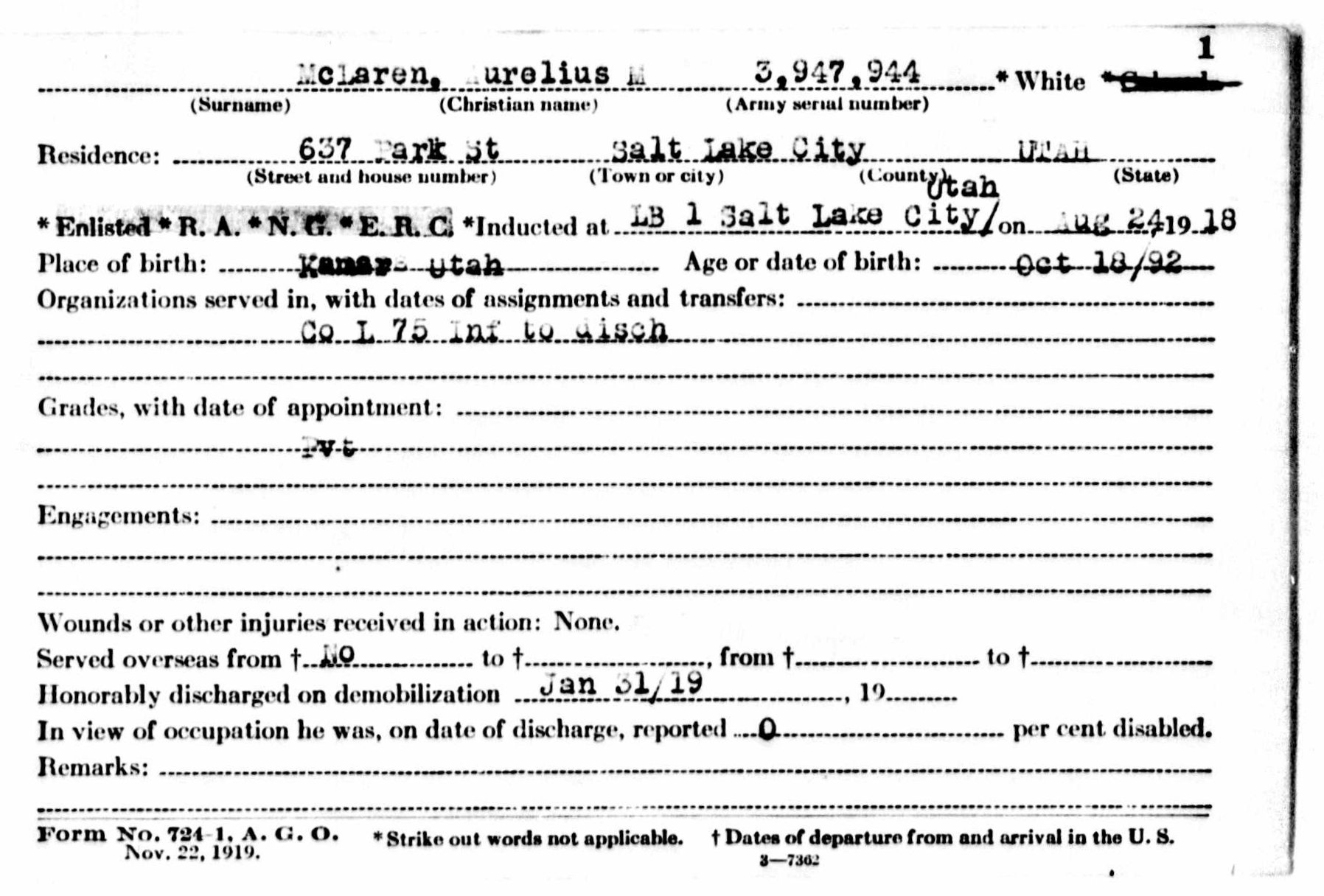
Contents [] World War I (SNs) were first created in 1918 as a result of the becoming involved in World War I and the need for a record tracking system capable of indexing the millions of soldiers who were joining the ranks of the. Prior to this time, the only way to index lists of soldiers was by use of and rolls. As the National Army rose into the millions, this old method of musters and rosters became outdated and a new system had to be developed. The decision to create Army service numbers was made in February 1918 with the first service numbers to be issued only to Army enlisted personnel.
The Army officer corps was still relatively small and the Navy was still maintaining ship rosters to keep track of its personnel. The Marine Corps and Coast Guard were also relatively small organizations without the need for a service number system to track personnel. The first soldier to receive an Army service number during the First World War was who was designated to hold service #1 in the in February 1918. Throughout the remainder of World War I, service numbers were issued to most enlisted personnel with the numbers eventually ranging from 1 to 5,999,999. In 1920, a year after the close of World War I, the Army introduced the first 'service number prefix' which was intended to be a letter placed in front of the service number to provide additional information about the veteran. The first prefix to be created was R which was used to identify Regular Army personnel who had reenlisted after the close of World War I and the disbandment of the National Army. Again, Arthur Crean was the first person to receive a service number prefix and his new service number became R-1.
Something is off with your military serial number decoding. My father retired from the USAF in 1961 as a major. His name was Wilson Reid Lowther and his serial number was AO 860517. If you do a search on the web, you can find his name and this serial number I memorized as a youth, and his name on the USAF retirement rolls. Online Veterans and Military Documents. World War II Army Enlistment Records (Electronic Army Serial Number Merged File) (description). [Search AAD for these.
The Army also created an F prefix for those who had served as World War I field clerks. That same year, the Army opened up the service number rolls to officers and issued the first officer number to. Pershing held officer service number #1 with the prefix O making his service number O-1.
Linplug Saxlab 2 2.1.3 Serial Numbers. Convert Linplug Saxlab 2 2.1.3 trail version to full software. LinPlug SaxLab 1.0.2 Serial Number Keygen for All Versions Find Serial Number notice: LinPlug SaxLab serial number, LinPlug SaxLab all version keygen, LinPlug SaxLab activation key, crack - may give false results or no results in search terms. Version Number: The Version Number display is located on the upper right of the instrument's Rear Panel. It shows the version of the instrument. Clicking on the SaxLab 2 logo in the middle of the Rear Panel returns you to the Front Panel. Linplug Saxlab Vsti 2.1.4 Serial Number Serial Numbers. Convert Linplug Saxlab Vsti 2.1.4 Serial Number trail version to full software. Idm serial number.
In 1935, the Army created a second officer prefix AO intended for Regular Army officers who were aviators in the. The Army officer number system was determined simply by seniority and entry date into the Army officer corps; between 1921 and 1935, officer numbers ranged from 1 to 19,999. Enlisted service numbers continued in a similar fashion with enlisted numbers picking up where the World War I numbers had left off; between 1919 and 1940 the numbers ranged from 6,000,000 to 7,099,999. Enlisted personnel who were World War I veterans continued to hold their pre 6 million service numbers. World War II By 1940, it was obvious to most in the U.S. Military establishment that America would soon be involved in a major war. To that end, had been introduced and the was founded to serve as a mixed volunteer and draft force raised to fight in the coming war.